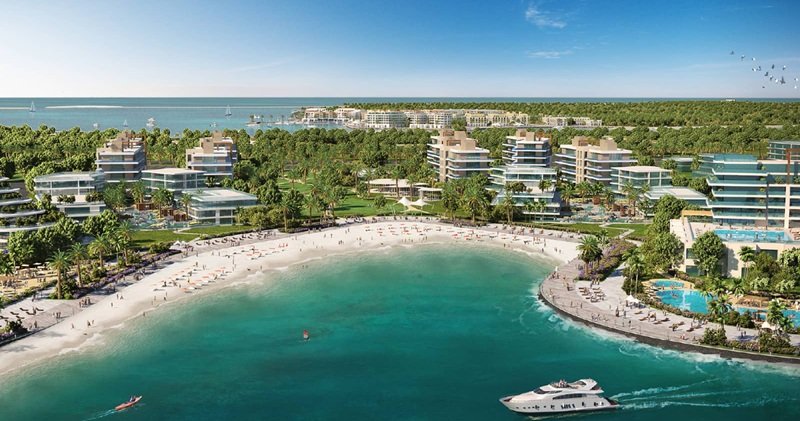
Dubai Islands has a growing off-plan property market, with 151 new off-plan projects currently listed, the market includes apartments, villas, penthouses, duplexes, townhouses, and hotel apartments. Payment plans vary by project and developer, so buyers need to review the full payment schedule before committing.
Current projects show payment plans such as 70/30, 60/40, 50/50, 35/65, 20/60/20, 20/50/30, 10/40/50, and 20/45/35. This gives buyers several ways to spread the cost of an off-plan property.
The main question is simple: how much money does a buyer need to pay at booking, during construction, and at handover?
How Dubai Islands Off-Plan Payment Plans Work
An off-plan payment plan divides the property price into several payments. The schedule depends on the project.
A payment plan may include:
- Initial payment at booking
- Payments during construction
- Payments linked to construction milestones
- Final payment at handover
- Post-handover payments in some projects
For example, a 70/30 plan means 70% of the property price is scheduled before or during construction and 30% at handover. A 20/60/20 plan means 20% is paid at the start, 60% during construction, and 20% at handover.
The exact payment dates must be checked in the developer’s sale agreement. A percentage shown in a listing does not always explain when each installment is due.
Current Dubai Islands Payment Plan Options!
Dubai Islands listings show a wide range of payment structures.
| Payment Plan | Basic Structure |
|---|---|
| 70/30 | 70% before handover, 30% at handover |
| 60/40 | 60% before handover, 40% at handover |
| 50/50 | 50% before handover, 50% later |
| 35/65 | 35% before handover, 65% later |
| 20/60/20 | 20% initial, 60% during construction, 20% at handover |
| 20/50/30 | 20% initial, 50% during construction, 30% later |
| 10/40/50 | 10% initial, 40% during construction, 50% later |
| 20/45/35 | 20% initial, 45% during construction, 35% later |
For example, The Meriva Collection is listed with a 70/30 plan, while Meriva Signature is listed with a 20/50/30 plan. Beach Residences Dubai Islands is listed with a 20/60/20 plan, and Harbour by Prestige One is listed with a 20/45/35 plan.
How Much Is the Initial Payment?
The initial payment depends on the project.
Some current Dubai Islands projects show an initial payment of 10%, while others require 20% or 35%. Sources states that down payments across Dubai Islands projects typically range from 10% to 20%, although individual payment plans can have different structures.
For a property priced at AED 2 million:
- 10% = AED 200,000
- 20% = AED 400,000
- 30% = AED 600,000
- 35% = AED 700,000
These amounts represent the relevant percentage of the property price. They do not include other purchase costs that may apply.
AED 2 Million Property With a 70/30 Plan
Consider an off-plan property priced at AED 2 million with a 70/30 payment plan.
The total property price is:
AED 2,000,000
The 70% portion is:
AED 1,400,000
The 30% portion is:
AED 600,000
If the developer divides the 70% into several installments, the buyer will not necessarily pay AED 1.4 million at one time.
The buyer should check the exact installment dates in the payment schedule.
Current Dubai Islands listings include The Meriva Collection with a 70/30 payment plan and a listed launch price of AED 2.7 million.
AED 2 Million Property With a 60/40 Plan
A 60/40 plan on a AED 2 million property would work as follows:
- 60% = AED 1.2 million
- 40% = AED 800,000
The AED 1.2 million may be split across several construction payments.
The remaining AED 800,000 would be due according to the agreed schedule.
Current Dubai Islands projects such as Ocean Bay by Samana and Ventone are listed with 60/40 payment plans.
AED 2 Million Property With a 20/60/20 Plan
A 20/60/20 payment plan would divide a AED 2 million property into:
- Initial 20% = AED 400,000
- Construction-stage 60% = AED 1.2 million
- Handover 20% = AED 400,000
This structure reduces the initial payment compared with a 35/65 plan.
However, the buyer still needs to prepare AED 1.2 million for the construction period.
Beach Residences Dubai Islands and Rixos Beach Residences Phase 2 are currently listed with 20/60/20 payment plans.
AED 2 Million Property With a 20/50/30 Plan
Under a 20/50/30 plan, a AED 2 million property would require:
- 20% = AED 400,000
- 50% = AED 1 million
- 30% = AED 600,000
The exact timing of the 50% and 30% payments depends on the project.
Several Ellington projects in Dubai Islands, including Meriva Signature and Meriva Shores, are currently listed with a 20/50/30 payment plan.
AED 2 Million Property With a 10/40/50 Plan
A 10/40/50 plan requires a smaller initial payment but a larger final payment.
For a AED 2 million property:
- 10% = AED 200,000
- 40% = AED 800,000
- 50% = AED 1 million
This type of plan can reduce the amount needed at booking.
However, the buyer must have a clear plan for the AED 1 million final payment.
Current Dubai Islands listings include Hado by Beyond and Siora with 10/40/50 payment plans.
Examples of Dubai Islands Projects and Payment Plans
Current listings provide several examples of how payment plans differ between projects.
| Project | Listed Launch Price | Payment Plan |
|---|---|---|
| The Meriva Collection | AED 2.7M | 70/30 |
| Meriva Signature | AED 2.7M | 20/50/30 |
| Beach Residences Dubai Islands | AED 2.6M | 20/60/20 |
| Harbour by Prestige One | AED 1.8M | 20/45/35 |
| Hado by Beyond | AED 2.3M | 10/40/50 |
| Ocean Bay by Samana | AED 2.27M | 60/40 |
| Treppan Living Prive | AED 3.24M | 20/20/60 |
These are listed launch prices and payment plans. They should not be treated as fixed prices for every unit in the project. Unit size, floor, view, availability, and sales phase can affect the final price.
What Is the DLD Fee on an Off-Plan Property?
The property price is not the only amount a buyer needs to consider.
Dubai’s official fee schedule states that registering a real property sale contract carries a fee of 4% of the sale contract value.
For a AED 2 million property:
4% of AED 2 million = AED 80,000
So, before considering other costs, the buyer could have:
Property price: AED 2,000,000
DLD registration fee: AED 80,000
Total: AED 2,080,000
The exact payment arrangement for the DLD fee should be confirmed with the developer and the relevant Dubai Land Department process.
Are DLD Fees Included in the Payment Plan?
Not automatically.
A developer’s 70/30, 60/40, or 20/60/20 plan generally describes how the property price is paid.
Government fees and other transaction costs can be separate.
Some Dubai Islands listings advertise DLD waivers or discounts as part of specific offers. These offers are project-specific and may have conditions. Current listings, for example, include promotions that mention a 4% DLD waiver. Buyers should confirm the offer directly with the developer before relying on it.
Other Costs Buyers Need to Consider
Buyers should also check for:
- Property registration costs
- Oqood-related charges, where applicable
- Trustee or administrative fees
- Real estate agency fees
- Mortgage costs
- Bank valuation fees
- Service charges after handover
- Property management costs
- Furnishing costs
The exact amount depends on the property, developer, transaction structure, and whether the buyer uses finance.
This is why the advertised property price should not be treated as the buyer’s full investment cost.
Can Buyers Use a Mortgage for the Final Payment?
Some buyers use mortgage finance for part of an off-plan purchase, but buyers should not assume that a bank will automatically fund the amount due at handover.
Mortgage approval depends on factors such as:
- Buyer’s income
- Credit profile
- Employment
- Existing debts
- Property
- Bank policy
- Project status
If a buyer expects to use a mortgage for the final payment, financing should be planned well before the payment deadline.
A buyer should also keep a separate cash reserve in case the final approved loan is lower than expected.
Post-Handover Payment Plans
Some Dubai Islands projects may offer payment structures where part of the property price is paid after handover.
This can reduce the amount required before receiving the property.
But a post-handover plan does not reduce the property price.
It only changes the payment timing.
Before choosing such a plan, buyers should check:
- Total amount due after handover
- Number of installments
- Payment frequency
- Length of the payment period
- Any additional fees
- Restrictions on resale
- Whether the property can be rented before the full price is paid
The signed sale agreement should be the main source for these terms.
How Much Cash Does a Buyer Need?
The answer depends on the payment plan and property price.
For a AED 2 million property:
| Payment Plan | First Portion | Middle Portion | Final Portion |
|---|---|---|---|
| 70/30 | AED 1.4M* | — | AED 600K* |
| 60/40 | AED 1.2M* | — | AED 800K* |
| 20/60/20 | AED 400K | AED 1.2M | AED 400K |
| 20/50/30 | AED 400K | AED 1M | AED 600K |
| 10/40/50 | AED 200K | AED 800K | AED 1M |
| 35/65 | AED 700K* | — | AED 1.3M* |
The buyer also needs to account for applicable government and transaction fees.
What Buyers Should Check Before Booking
Before paying a booking amount, buyers should check the full payment schedule.
1. Property Price
Confirm the exact price of the selected unit.
2. Initial Payment
Check the amount required at booking and the deadline.
3. Construction Payments
Check every installment and its due date.
4. Handover Payment
Confirm the exact amount due when the property is completed.
5. Post-Handover Amount
If the plan extends beyond handover, check all future payments.
6. DLD and Other Fees
Confirm which costs are included and which are paid separately.
7. Handover Date
Check the expected completion date and the terms in the sale agreement.
8. Escrow Details
Buyers should confirm that the project is properly registered and that the required escrow process is in place. Dubai Land Department provides a project registration service that includes the opening of an escrow account for off-plan projects.
9. Sale and Purchase Agreement
Read the SPA before signing. The signed agreement is more important than a marketing brochure or payment-plan advertisement.
Dubai Islands Off-Plan Payment Plans: Key Numbers
For buyers comparing projects, the current market gives a clear range of payment structures.
Initial payments can start around 10% in some projects, while other plans require 20% or more. Current listings also show final payments ranging from 20% to 65%, depending on the project.
For example:
- AED 2 million property at 10% = AED 200,000 initial payment
- AED 2 million property at 20% = AED 400,000 initial payment
- AED 2 million property at 35% = AED 700,000 initial payment
- AED 2 million property at 50% = AED 1 million
- AED 2 million property at 65% = AED 1.3 million
These figures show why the payment plan can have a major effect on a buyer’s cash flow.
What Is the Best Payment Plan for Buyers?
There is no single payment plan that is best for everyone.
A 10/40/50 plan may suit a buyer who wants to keep the initial payment low but has enough funds for the final payment.
A 20/60/20 plan may suit a buyer who wants a smaller final payment but can make larger payments during construction.
A 70/30 plan may suit a buyer who can commit more capital before handover.
The right choice depends on the buyer’s available cash, income, financing plans, and expected holding period.
Final Takeaway
Dubai Islands offers a wide range of off-plan payment plans. Current projects show structures such as 70/30, 60/40, 20/60/20, 20/50/30, 10/40/50, 35/65, and other variations.
For buyers, the key is to look beyond the advertised starting price.
Before buying, calculate:
Property price + initial payment + construction installments + handover payment + DLD fee + other purchase costs.
For a AED 2 million property, the initial payment could range from AED 200,000 to AED 700,000 or more depending on the plan. The DLD sale registration fee is set at 4% of the sale contract value under Dubai’s fee schedule, which would be AED 80,000 on a AED 2 million purchase if applicable.
The best payment plan is the one that matches the buyer’s cash flow and leaves enough funds to meet every payment on time.
 Amoli
Amoli